
James Randi and his water dowsing tests
James Randi was a magician and pseudoscience investigator who conducted numerous water dowsing tests in a range of countries to determine dowser efficacy. The tests mostly required test participants to find buried pipes containing running water and were all similar in design and execution. Substantial cash prizes were on offer to any dowser who could demonstrate accurate dowsing skill, but the money was never claimed as the dowsers failed to find hidden water samples at a rate better than chance.
This led James Randi to conclude that water dowsing does not work and that the dowsers are deluded. James Randi convinced many in his large audience that water dowsing is ineffective. But, have people been deceived by his test results and tricked into believing something that is not supported with valid scientific evidence?
Over time, James Randi gained an enormous following, particularly people who were skeptics. He was seen as someone able to expose frauds who claimed to possess paranormal abilities. The consistently negative results of his water dowsing tests appeared to be reliable, convincing, and compelling evidence that water dowsing does not work. Many trusted the validity of his test results and blindly adopted his conclusions. However, none of the water dowsing tests that James Randi designed and conducted were valid scientific experiments, which left him with no reliable data on which to base appropriate conclusions about water dowsing. I drew this conclusion after completing in-depth analyses of all the tests he conducted where adequate information about them was available for scrutiny. Many of my findings are discussed below.
James Randi’s conclusions about water dowsing are in stark contrast to reality. Vast numbers of productive bores have been drilled and wells dug on sites selected by dowsers in countries all over the world over a very long time frame. Some dowsing critics respond that the dowsers have no innate ability to detect underground water. Rather, their success is explained away by the presumption that water can basically be found almost everywhere underground and so the dowsers can’t miss. Other critics speculate that the dowsers unconsciously detect subtle cues from vegetation or topography that guides them to the water. Neither of these claims has been supported with verifiable scientific evidence.
Reliable Evidence of Dowsing
There is reliable published evidence that dowsers have been successful on a large scale in finding underground water in arid regions of the world, this being presented in the report titled Unconventional Water Detection: Field Test of the Dowsing Technique in Dry Zones: Part l pp 14 – 15. A project was conducted with the aim of finding efficient and reliable methods of locating potable water supplies in Third World countries. Over a ten-year period, at least 2000 sites which had been selected by dowsers were tested. The dowsers’ rate of success at locating underground water in very narrow streams was well above what could be expected by chance through random drilling.
In Sri Lanka, 691 holes were drilled and 96% of these produced useable water. Additionally, in many cases, the dowsers were able to predict the depth to the water source and the yield of the bore to within 10 – 20%. I must stress that these data are of an anecdotal nature since the dowsers, who were working under the supervision of scientists during the project, were not conducting scientific testing.
However, this demonstrates what dowsers can achieve when underground water is not uniformly distributed and is hard to find.
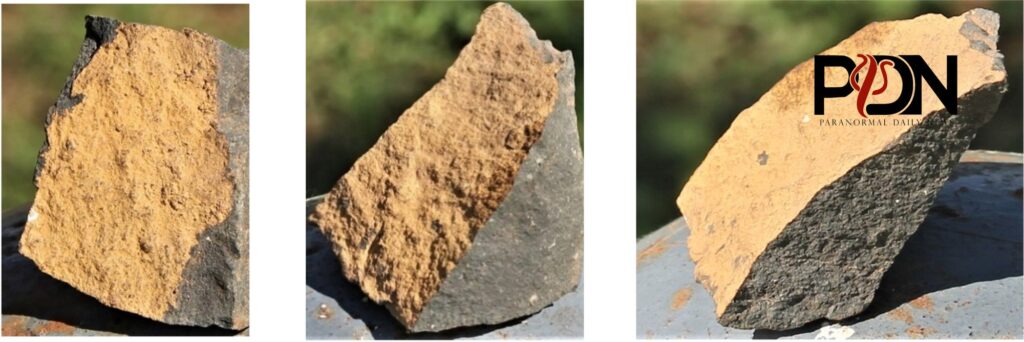
The dowsers’ results quoted in the report above align closely with my own record of dowsing success which, over a period of 43 years, exceeds a 99% success rate and cannot be explained by chance alone. In the region where I dowse, the accessible underground water is scarce and largely confined to very narrow fractured rock aquifers that are often just a few inches wide. To be intercepted by the driller, these fractures require precise drill site selection. The photographs in Figure 1 below show what my dowsing target frequently looks like. The images are of samples of fractured rock that display evidence of being in contact with water as they have a rusty appearance one surface which was one side of a fracture in solid basalt rock. The other surfaces show how the rock has been freshly broken by the drill bit.

Clearly, there is a significant divergence between the evidence and what James Randi concluded. What was wrong with his experiments? Why did they fail? The answer is explained below.
Did James Randi conduct valid scientific experiments?
The first step in uncovering how people may have been misled by the James Randi tests was to determine if his tests were valid scientific experiments. Let’s begin with a refresher course on why it’s important for a test to be scientific:
Determining that a test is scientific is essential for ensuring that the results generated are reliable and can be trusted. A scientific test follows the scientific method and provides a structured, objective, and verifiable approach that ensures consistency and minimizes error. This helps to eliminate bias, personal opinions and preconceived notions that are likely to influence the outcome, enhances the quality of results, and allows for the replication of experiments by other researchers. The results of any test that is not a valid scientific experiment cannot be used to prove or disprove anything. Results from these tests are ignored by the scientific community and do not contribute any new knowledge about the subject being studied.
A valid scientific experiment needs to be conducted by competent and unbiased scientists who follow the scientific method. With a test of water dowsing involving human participants, it must be conducted on a double-blind basis to ensure the dowsers are not given any clues to assist them. The premise and assumptions of the experiment must be explicitly stated and shown to be correct. All variables (factors that can affect the experimental outcome) need to be identified and controlled. The experiment must be rigorous in nature and test a representative sample of the target population with adequate replications. Any conclusion must match the evidence and be justifiable, based on thorough statistical analysis of the results and be devoid of opinion. The conclusion must be limited to that experiment only and not extrapolated to some other setting. The experiment should be repeatable by another researcher. The test report should be peer-reviewed by another scientist before it is published to establish the validity and reliability of the test.
Analyzing James Randi’s Dowsing Tests
My thorough analyses of the James Randi tests reveal that they bear little resemblance to a valid scientific experiment, being plagued with errors and failing to follow the scientific method. The most significant error in his tests is that the premise of his experiments was invalid. In his test conducted in Australia (James Randi in Australia – 45th Anniversary Edition), Italy (Skeptical Inquirer “A controlled test of Dowsing abilities”, James Randi) and Kassel Germany (How does water dowsing work? Christopher S. Baird West Texas A&M University), dowsing participants were required to discriminate between buried pipes containing running water and other pipes that could contain either still water or no water. Without any scientific basis or proof of prior testing, his thinking was that to prove their dowsing efficacy, dowsers needed to locate a physical sample of water, and the water had to be running. This assumption appears to be false because running (and still) water has never been shown to emit or generate anything a human could consciously or unconsciously detect.
What do Dowsers Actually Detect?
Dowsers who can locate buried water pipes appear to get the same dowsing reaction over the pipes if they contain running water, still water or no water. It is not the water they find, it is the pipe. The same situation occurs in the field situation. If a dowser locates an underground stream (fractured rock aquifer), it could contain running water, still water, or no water. The dowsing reaction in all three scenarios is identical. Again, it doesn’t appear that the dowsers are detecting water, but in the field, they appear to be detecting the subterranean conditions needed to collect and store water. The results of two substantial scientific experiments (JSE Vol 9 No 2 pp 159 – 189 titled “Unconventional Water Detection: Field Testing of Dowsing Technique in Dry Zones: Part 2 1995.) conducted by German Scientists verify my observations. In the Munich or “Scheunen” experiment, 500 dowsers were unable to detect the location of a hidden pipe containing running water at a rate of success better than chance.
In the second experiment referred to as the “walkway” experiment, a large proportion of the 43 dowsers being tested showed an impressive ability to detect the location of an underground rock fracture where water could be located. The combined results from the two experiments led the scientists to propose that
“…dowsers do not at all react to water as a chemical substance, whether stationary or flowing,”
and
“A number of carefully selected dowsers were certainly able to detect faults, fissures and fractures to a high level of accuracy.”
Clearly, the testing mechanism used by James Randi in his tests was invalid. I liken this situation to testing someone for COVID by using a pH test kit designed to determine soil pH instead of using a rapid antigen test. You are using an inappropriate test that is not going to help you find out what you want to know.
Randi’s Faulty Assumptions
Conducting his experiments with faulty assumptions and the wrong test mechanisms has immediately disqualified James Randi’s water dowsing tests from being valid scientific experiments. His tests were inadequate for other reasons as well: In the Australian trial, the 10 dowsers tested represented less than 1% of the country’s dowsing population meaning that this was not a significant enough sample of the dowsing population. Each participant made 5 attempts at detecting the correct pipe. This is an insufficient number of replications. The situation in Italy in 1979 was even more inadequate where only four competent dowsers were tested, and they made just a few attempts each. These tests were so small that they did not generate an adequate volume of data for any meaningful statistical analysis, demonstrating that they lacked enough evidence for any conclusions. Further problems that plagued individual tests are described below.
James Randi recognized that his tests were not scientific. In the video James Randi in Australia – 45th Anniversary Edition starting at 9 minutes 12 seconds, referring to the scientific evidence for water dowser efficacy, James Randi said “No scientific test has ever been done in spite of claims to the contrary, no scientific tests have been done.” This statement includes his own tests conducted in the past.
Were scientists involved with his tests?
Much of the reason why people accepted James Randi’s tests and conclusions as being reliable was due to the absence of scientific scrutiny that would allow people to learn that the tests were faulty. James Randi avoided input or criticism from scientists, apparently holding them in poor regard. Without any scientific qualifications or experience, he conducted tests independently of any recognized scientific institution. Research scientists were not involved in the design of the tests, were not present while the tests were conducted to monitor compliance with test protocols and did not complete any peer reviews of the test reports before their results were released to the public. Any competent research scientist would have been able to detect major design and procedural faults with his tests, preventing them from being viewed as valid. By completely sidestepping the involvement of scientists, James Randi conducted poorly conceived tests which he then promoted as definitive proof that dowsing wasn’t real.
To complicate matters further, James Randi required participating dowsers to sign a contract stating that they agreed that the test was fair. Dowsers are generally not research scientists and would not have the skills and knowledge to be able to determine if a test was valid. However, seeing the dowsers agree that each test was fair gave people a feeling of confidence that James Randi was conducting valid tests.
Disguising his tests as being scientific experiments
James Randi added a veneer of legitimacy to his tests by describing them with scientifically sounding terms like proper observing and controlled conditions, controlled scientific study, proper scientific protocols, double-blind conditions, randomized selection, definitive test, and legitimate setup. The central plank of his assurances to dowsers, his audience, and the media that his tests were legitimate was that they were conducted under strict controlled conditions. To James Randi, that meant conducting his tests under double-blind conditions.
Certainly, this is a necessary precaution that must be followed in tests that involve human subjects to ensure they are not given any clues that could assist them. However, conducting a test under double-blind conditions does not by itself make the test a valid scientific experiment as many other criteria must also be met. To a scientist, controlled means:
- that all the variables (the factors that could influence the experimental outcome) are identified and quantified.
- All these variables are then kept constant except for one variable (the independent variable) that the researchers alter.
James Randi rarely recognized the variables in his tests and made an inadequate effort to control the ones he did identify. In his test in Australia, he failed to recognize or address the fact that the whole test area most likely had underground water and he failed to ensure that the pipes drained fully between dowser tests. In other tests, he failed to understand that there could be utilities or objects below the test site that act as distractors and cause dowsers to experience false dowsing reactions and confusion. These include sewage lines, electricity and telecommunication cables, water pipes, drainpipes, iron-rich rocks and large iron objects.
Other than being conducted under strict double-blind conditions, the tests James Randi conducted failed to match his description of them. He created the illusion of his tests being scientific, which deceived people into believing they were valid tests that produced reliable results.
Conditioning the dowsers with a pretrial confirmation test
Before dowsers participated in any of James Randi’s water dowsing tests, they were required to see if they registered a dowsing reaction over a pipe containing running water that was in clear view, and this is what usually happened. This calibration test is an example of confirmation bias where the dowser’s conscious brain caused their dowsing rods to cross over the target because they could see it. But when they attempted to detect the same pipe when hidden from view, they failed to register a dowsing reaction. This shows that dowsers have no innate ability to detect running water they can’t see which is understandable since water does not generate anything known to science that humans can detect.
Experiencing a dowsing reaction in the calibration test gives the dowsers the confidence to believe that they can find the hidden water during the test and which also leads them to agreeing that they are participating in a fair test. However, this false confidence deceived them into believing they had a dowsing skill which they did not possess. Whether this was intentional or not, it conditioned the dowsers into believing something that wasn’t true.
The dowsers were not the only ones being conditioned and deceived. People watching a video where dowsers succeed during the confirmation test adopt the same basic belief as the dowsers. In the actual test when the dowsers fail, the observers quickly form the belief that dowsing does not work since the dowser’s dowsing rods worked when they could see the target but didn’t respond when the target was hidden. This worked very much in James Randi’s favor.
James Randi manipulates the data
James Randi had a set idea about what the outcome of each of his experiments should be, namely that the dowsers would collectively fail to do better than chance. This shows he suffered from confirmation bias and the more tests he conducted, the more entrenched this bias became.
In the video James Randi in Australia – 45th Anniversary Edition, the water dowsers collectively produced a result of 22% success when the expected rate of success purely by chance was 10%. James Randi completely ignored the 22% result as it did not fit with his preconceived notion of what the outcome should have been. He then manipulated the data by adding in the results from a metals dowsing test conducted on the same day (dowsers were not selected on their proficiency at dowsing metals). This diluted the water dowsing result, and an overall result was then quoted at just above 10%.
This allowed James Randi to conclude that the results were “well within chance”, matching his narrative. This was clearly unethical behavior. People not mathematically literate could have been easily deceived into believing that this act of data manipulation was an acceptable use of the data.
James Randi’s explanation of the dowsing reaction
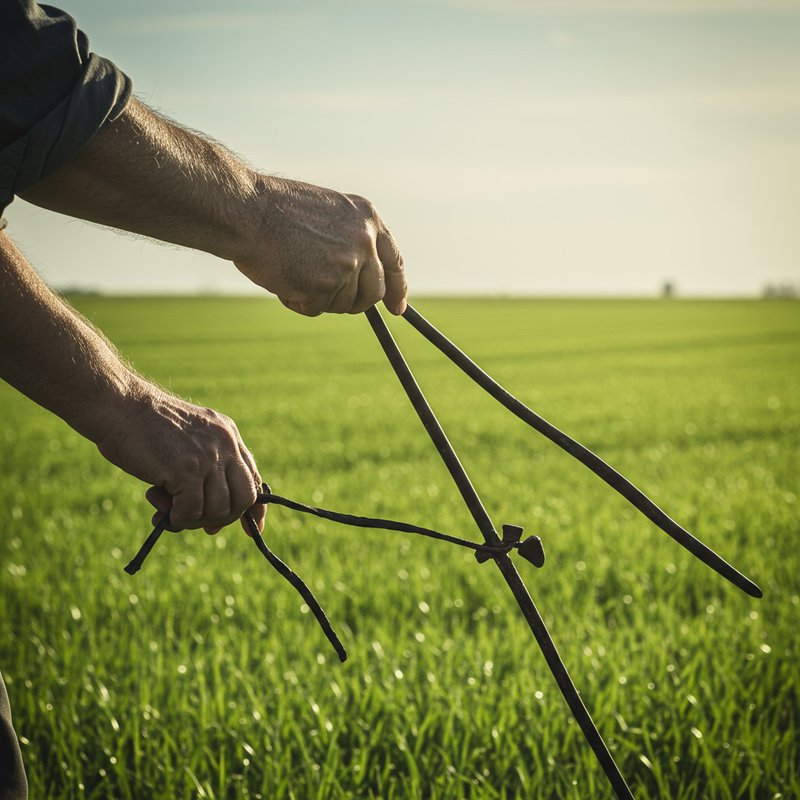
The video James Randi in Australia – 45th Anniversary Edition contains several observable examples of Jame Randi committing malpractice, deceit, trickery, and presenting incomplete information. After a theatrical attempt to use dowsing rods, James Randi expounded his opinion on what makes dowsing rods move with the main thrust in his explanation relating to the unstable nature of dowsing instruments during use. I use a single dowsing rod which I fashion from 10-gauge wire that has enough inertia not to move much while I am walking. The handle on the rod is bent down at an angle of 45 degrees to the shank.
This design of dowsing rod requires a significant change in my hand position to cause it to traverse through 90 degrees of movement as shown in Figure 2 below. I have good control of the rod as I walk, and it rarely deviates more than 10 degrees from my direction of travel allowing me to easily discriminate between a random movement and a definite dowsing reaction that occurs above a water source.

Figure 2. Photographs showing the author’s hand position on the handle of his dowsing rod when it is in search mode and when he records a dowsing response above a subterranean water source.
James Randi quoted psychologists’ explanations for the dowsing response which relates to the ideomotor effect. He was correct in asserting that dowsing rod movement was caused by adjustments of the dowser’s hands which resulted in amplified movements in their dowsing instrument, and that this bodily movement is not under conscious control. To a dowsing beginner, the rods appear to be moving automatically, but it is the subconscious brain that initiates the hand movements.
What James Randi failed to explain was what caused the subconscious brain to act in the way it did. It can be the dowser’s thoughts, mental images, ideas, beliefs, and expectations that trigger the physical movement with no conscious decision-making being involved.
While this is how a psychologist defines the ideomotor effect, there is another situation where dowsing rods move. The “walkway” experiment referenced above clearly showed that sensitive blindfolded dowsers can detect faults in subterranean rock strata where water is commonly found. Scientists are yet to determine the mechanism for this dowser response. It is possibly related to the change in the Earth’s magnetic field that occurs wherever there are subterranean interruptions. The dowsers may detect these subtle changes. This is the principal of operation of many hand-held water detectors used by some water drillers.
To a person who is not scientifically literate, James Randi’s explanation of dowsing rod movement certainly sounds plausible, but it is incomplete and does not explain how the dowser is able to find water sources in the field situation.
Conclusion
James Randi’s water dowsing tests cannot be classified as valid scientific tests for multiple reasons. Consequently, the test results are not reliable and should not be used by anyone to determine if water dowsing does or doesn’t work.
By avoiding the involvement of scientists in all aspects of his tests, James Randi was able to conduct and publicize invalid tests with immunity from the scientific scrutiny that people rely on to determine test legitimacy. Furthermore, he created the plausible illusion that his tests were valid scientific experiments.
James Randi used a range of techniques to deceive the dowsers and his audience including psychological conditioning, and in at least one case, manipulation of data that skewed the test results.
Until scientists conduct enough valid experiments involving the field testing of dowsers, the world will have not have enough valid data to determine dowser efficacy. In the meantime, it would be wise to discount the findings of tests conducted by skeptics like James Randi.
