
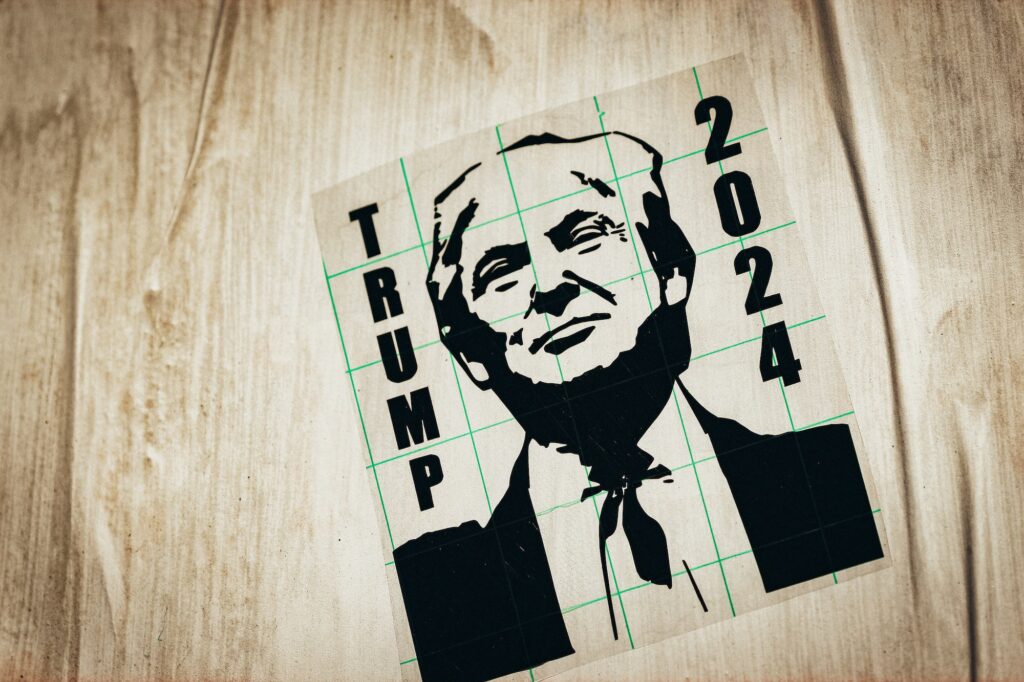
New York— In the heart of Milwaukee, Wisconsin, the stage was set for an engaging showdown as eight Republican presidential candidates took their positions for the first republican debate. The absence of former President Donald Trump might have been anticipated as a defining factor, but as the evening unfolded, it became evident that the focus was squarely on the contenders.

The debate was anything but lackluster, as the candidates delved into a plethora of pressing issues. From abortion restrictions, climate change, urban violence, K–12 education, immigration, the Russia–Ukraine conflict, and China's global rise, the topics covered showcased the breadth of challenges facing the nation. In the midst of this discourse, shades of the pre-Trump Republican Party debates occasionally emerged, reminding of a time when issues like foreign policy, government spending, and illegal immigration took center stage.
However, while the conversations were animated and the distinctions between candidates apparent, it remains improbable that any participant will hold the highest office. Despite this, insights can still be gleaned from the debate, shedding light on both the current state of the campaign and the Republican Party's evolving landscape.
Two victors emerge from the first Republican presidential debate:
Donald Trump: An Indomitable Presence

Although absent physically, Donald Trump's presence was palpable throughout the event. Even though none of the eight contenders explicitly championed the primary front-runner, it was former South Carolina governor Nikki Haley who ignited the conversation around the staggering $8 trillion in federal spending during Trump's administration. This pivotal moment occurred just 15 minutes into the debate.
Surprisingly, Donald Trump emerged from the debate as an undisputed victor. Notably, Vivek Ramaswamy, a prominent voice in the debate, consistently defended him. Responding to a controversial query from moderators Bret Baier and Martha MacCallum, six out of the eight candidates pledged allegiance to Trump, even in the event of his indictment.
The audience's allegiance was equally evident, as boos echoed whenever individuals such as former New Jersey governor Chris Christie, former Vice President Mike Pence, or Nikki Haley criticized Trump. By the debate's end, it was apparent that no candidate could viably stand as an alternative to the Trump phenomenon.
While Asa Hutchinson, former Arkansas governor, Christie, and Pence voiced criticisms regarding Trump's role in the events of January 6, these attacks merely highlighted the futility of challenging the incumbent. Despite contenders' attempts to spar over conservative credentials, policy histories, and positions, none could deal a decisive blow to the individual who consistently maintained a significant lead in the polls.
Trump's refusal to endorse the loyalty pledge and his objection to boycotting general election debates conducted by the Commission on Presidential Debates underscore his stance. "You have, really, an obligation to do that," he asserted in a radio interview last spring.
Viviek Ramaswamy: Rising To The Occasion
In the absence of Trump, the spotlight that was expected to be on second-place Florida Governor Ron DeSantis shifted unexpectedly to Ramaswamy, the candidate gaining momentum and securing the third position in the race.
Ramaswamy's primary challengers turned out to be Pence and Christie, who consistently attempted to undermine his political experience. Christie drew a comparison between Ramaswamy's initial response, where he humorously referred to himself as "a skinny guy with a funny last name," and Barack Obama.
Nonetheless, Ramaswamy remained undeterred throughout these criticisms. What worked to his advantage was the opportunity to be contrasted with the two most unpopular contenders in the competition, Pence and Christie.
Ramaswamy also frequently seized the moment, exploiting the somewhat lenient enforcement of the debate regulations to position himself at the center of attention.
While Ramaswamy encountered a few challenging instances, notably when fellow candidates, including Haley, challenged his diplomatic stance towards Russia's incursion into Ukraine.
A Glimpse into a Pre-Trump Republican Era
Interestingly, the debate offered glimpses of a bygone era, a time before Trump's impact reshaped the Republican landscape. Proposals, specific disagreements, and nuanced details once again took center stage, recalling the era when these aspects truly mattered. Although stark differences existed among the candidates, the reluctance to overtly criticize Trump was noticeable.
The inclusion of a question about climate change and human contribution to its exacerbation, amidst the focus on debts, budget balancing, tackling international challenges, and abortion, showcased the moderators' attempt to incite genuine discussions. For the initial hour, the discourse felt like a throwback to a bygone era of Republican politics. However, as the night progressed, the tone shifted, and candidates engaged in more heated exchanges.
Diverse Stances on Trump: A Window into the Republican Landscape
Within this field of contenders, a variety of stances regarding Trump's influence on the party emerged. While both Christie and former Arkansas Governor Asa Hutchinson expressed reservations about endorsing Trump's stance, former Texas Representative Will Hurd stood out as the lone candidate with a resolute position. Hurd boldly declared his refusal to endorse the loyalty pledge, citing his unwillingness to back Trump as the eventual nominee.
Conversely, Christie adopted a pragmatic approach, signaling his willingness to meet the requirements for securing a spot on the debate stage. His readiness to sign the pledge emphasizes his prioritization of visibility and engagement through this platform.
The spectrum of responses highlights the intricate dynamics at play as candidates navigate the strategic implications of aligning themselves with a potential nominee. These responses reverberate beyond the immediate debates, encapsulating the broader implications for their respective campaigns.
In conclusion, while Donald Trump's physical absence was notable, his aura loomed large over the debate. Amidst policy discussions and disagreements, the emergence of two distinct front-runners became evident: Trump's undeniable presence and the diverse responses to his influence reflected the complexity of the Republican landscape. The debate illuminated the shifting dynamics within the party and offered a glimpse into the evolving course of the 2024 presidential campaign.