
While fierce fighting continues to rage across Ukraine’s eastern and southern fronts, the line of contact between the warring armies remains consistent and heavy rain makes offensive capabilities difficult.
A variety of social media posts and images coming out of the Ukraine war zone over the past week show conditions akin to those memorialized in images from World War I, with soldiers operating out of trenches filled knee-deep with freezing mud and water.
Drone Attacks Continue

Numerous attack drone videos also show the effects of the weather on the Russian Army as grenades dropped from the hovering drones aren’t even enough for the Russians huddling below to move. Video after video shows the men barely able to attempt to get away from the explosives. In one video, a Russian soldier is seen trying to commit suicide but having difficulty as their clearly blue hands cannot grip the weapon. After an edit in the video, the soldier is seen lying on the ground, apparently successful in their attempt. Another grenade lands next to them and detonates.
Weather Changes Bring A Potential Window Into Operations
The images come at a time when the weather in Ukraine is changing and winter moves closer. Ukrainian winters are cold, averaging in the freezing range for roughly three months. Winters are harsh in most places of the world, but Ukraine also has a history of dumping large amounts of snow in short periods of time. These are the conditions that will highlight any weaknesses in either side's equipment, preparation, morale, and supply lines.
Analysts with the Institute for the Study of War believe this slowdown in offensive action will continue for a few weeks until the ground solidly freezes, at which time it is expected heavy offensive operations on both sides will continue.
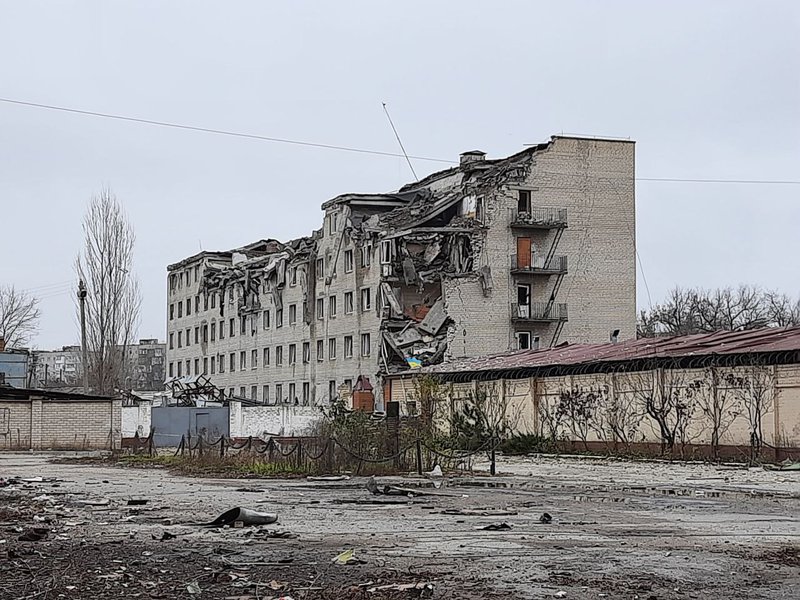
This is especially true in the south, Kherson Oblast, where the slowing of the kinetic line is giving the occupying Russian forces time to solidify defenses on the east side of the Dnieper River, to which Russian forces retreated last month after being forced out of the provincial capital of Kherson on November 11th.
Russian Offensive Looms – War In Ukraine Continues
The ISW reports that the Russians believe a cross-river offensive is likely, and they continue reinforcing an 80-mile line of defensive positions along the east side of the Dnieper River, stretching from Liubymivka to the Kinburn Spit – which is currently the scene of an ongoing battle for this strategic peninsula that controls access to the Dnieper River and South Bug Rivers from the Black Sea. Any Ukrainian victory here will open a launch point for the Ukrainian Army on the east side of the Dnieper River to start whittling away the Russian left flank with the ability to push deeper south toward the occupied Crimea Peninsula.
Weather in the south (Kherson), going into December, will not see a deep freeze for at least another few weeks. Conversely, on the eastern front near Kharkiv City, Luhansk Oblast, and Donetsk Oblast, temperatures are not expected to get above freezing for the foreseeable future, meaning offensive activity on this front will likely again become more fluid much sooner than in the south.
Signs that ground fighting is increasing in this region include Ukrainian government reports that heavy Russian ground operations are currently underway in the Bakhmut region of Donetsk Oblast, the scene of heavy fighting since the summer, where more than a dozen villages are under offensive pressure from the Russians. The war in Ukraine will continue despite slowing down due to mother nature.